Sunnyside sits in the heart of Washington's Lower Yakima Valley, a high-desert agricultural region known for its wine, hops, and wide-open scenery. The city of approximately 16,400 people is the second-largest in Yakima County and serves as a hub for the surrounding farming communities of Grandview, Prosser, Zillah, and Toppenish. The valley stretches roughly 70 miles through central Washington, flanked by the Cascade Mountains to the west and the high plains to the east. The landscape is distinct: irrigated orchards and vineyards against a backdrop of dry hills and big sky.
The region's climate is one of its defining advantages. With close to 300 days of sunshine annually and less than eight inches of rain per year, outdoor life is accessible year-round. Summers are warm and dry, winters are mild compared to much of the Pacific Northwest, and fall brings harvest season across thousands of acres of vineyards, orchards, and hop yards. Washington has no state income tax, which adds meaningful financial advantage for higher-income earners.
The Lower Yakima Valley is a short drive from several larger markets. Providers who want city amenities on weekends have real options without a long commute.
| City Population | ~16,400 (2020 Census) |
|---|---|
| County | Yakima County, WA |
| Regional Setting | Lower Yakima Valley, central Washington |
| Climate | Cold desert (BWk); ~300 sunny days/year; <8" annual rainfall |
| State Income Tax | None |
| Nearest Airport | Yakima Air Terminal (YKM) ~45 min; Tri-Cities (PSC) ~37 min |
| Destination | Drive Time |
|---|---|
| Tri-Cities (Richland/Kennewick/Pasco) | ~37 minutes |
| Yakima | ~45 minutes |
| Spokane | ~2 hours |
| Seattle | ~2.5 to 3 hours |
| Portland | ~3 to 4 hours |
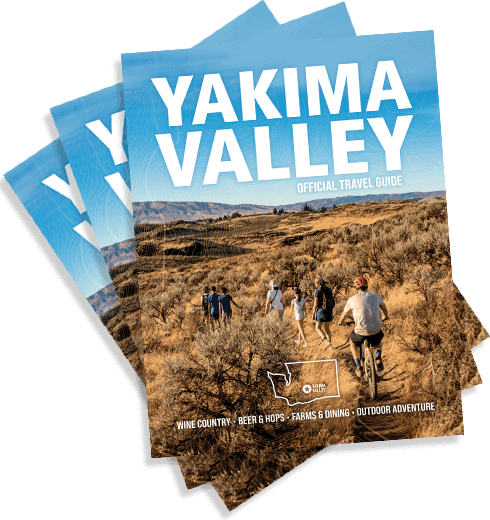
Looking to explore a new destination, but not sure where to start? A travel guide can help you discover the hidden gems and must-see attractions of a new place. Whether you're looking for the best local cuisine, the most scenic views, or the most exciting activities, a good travel guide can provide you with insider knowledge and expert recommendations. With a travel guide in hand, you can make the most of your trip and experience a new place like a local. So why not start planning your next adventure with a travel guide today?
The land that became Sunnyside was home to bands of the Yakama Indian Nation long before European settlement, who hunted and fished along the Yakima River and its tributaries for generations. Several tribes in the region were relocated onto the Yakama Indian Reservation following the 1855 treaty with the federal government, and the resulting Yakima War lingered until 1858.
The modern city traces its origins to 1893, when water engineer Walter Granger platted a townsite alongside the Sunnyside Canal, a project designed to bring Yakima River irrigation to the surrounding shrub-steppe landscape. The name "Sunnyside" was coined by a local merchant named W.H. Cline. The Panic of 1893 derailed Granger's financing almost immediately, and the town's population shrank to just seven families before stabilizing. By the end of 1901, the population had grown back past 300, and on September 16, 1902, residents voted 42 to 1 to formally incorporate.
Sunnyside's history is rooted in irrigation, faith, agriculture, and the waves of people who came to the valley looking for something better. That heritage still shapes the community today, from the farm families who have worked the same land for generations to the immigrant communities who have made the Lower Yakima Valley their home.
Sunnyside is a young, predominantly Hispanic community with deep roots in agriculture. With a median age of 27.8 years and more than a third of residents under 18, the city has a strong family orientation and a distinct cultural identity shaped by generations of Latino families who came to work the fields and stayed to build a community. Spanish is the primary language spoken in a majority of local households, and the city's restaurants, markets, businesses, and community events reflect that heritage.
The broader Yakima Valley draws a diverse mix of residents depending on the specific community. Prosser, roughly 14 miles to the east, has a more affluent character and a strong wine-industry presence. The Tri-Cities area (Richland, Kennewick, and Pasco), about 37 minutes away, has a significantly higher median income, partly driven by the Hanford Site's workforce of scientists and engineers. Many physicians and healthcare providers at Astria Sunnyside commute from Prosser, Grandview, Zillah, or the Tri-Cities rather than living in Sunnyside itself.
| Metric | Value |
|---|---|
| Population (2020 Census) | 16,375 |
| Median Age | 27.8 years |
| Residents Under 18 | 35.1% |
| Residents 65 and Older | 9.3% |
| Hispanic or Latino | ~85% |
| Foreign-Born Residents | ~33% |
| Households with Children Under 18 | 54.6% |
| Total Households | 4,637 |
| Median Household Income | ~$42,780 |
| Poverty Rate | ~22.6% |
| Homeownership Rate | ~55–58% |
The regional economy runs on agriculture, healthcare, and retail trade. Farming, fishing, and forestry is the largest employment sector for Sunnyside residents, followed by healthcare and social assistance, and retail trade. The valley's agricultural calendar drives seasonal employment across thousands of acres of hop yards, orchards, and vineyards.
Healthcare is one of the most stable employment sectors in the valley. Astria Health is among the largest employers in the Sunnyside area, and the broader healthcare ecosystem, including FQHCs, community health centers, and rural health clinics, provides significant employment across the region.
| Community | Character |
|---|---|
| Sunnyside | Agricultural hub; predominantly Hispanic; family-oriented |
| Prosser | Wine country; more affluent; popular with healthcare professionals |
| Grandview | Similar to Sunnyside; agricultural; close-knit |
| Zillah | Small, quiet; farm community |
| Toppenish | Yakama Reservation community; strong Native American and Hispanic heritage |
| Yakima | Largest city in the valley; diverse; full urban amenities |
| Tri-Cities | Richland/Kennewick/Pasco; higher incomes; large educated workforce |