College Station sits in east-central Texas in the Brazos Valley, about 83 miles northwest of Houston and 87 miles east-northeast of Austin. The city anchors the Bryan-College Station metropolitan area, the 15th-largest in Texas with roughly 268,000 residents. Texas A&M University shapes daily life, the local economy, and the cultural calendar through football, research, and campus events.
| Item | Detail |
|---|---|
| Regional Setting | East-central Texas, Brazos Valley |
| City Population | Approximately 125,000 |
| Metro Population | Approximately 268,000 |
| Anchor Institution | Texas A&M University |
| Nearest Airport | Easterwood Airport (CLL), on the Texas A&M campus |
| Houston | 95 miles southeast |
| Austin | 105 miles southwest |
| Climate | Humid subtropical |
| Sunny Days | Approximately 209 per year |
| Season | Average High | Average Low |
|---|---|---|
| Winter (Dec to Feb) | 60s F | 40s F |
| Spring (Mar to May) | 70s to 80s F | 50s to 60s F |
| Summer (Jun to Aug) | 90s F | 70s F |
| Fall (Sep to Nov) | 70s to 80s F | 50s to 60s F |
The area receives about 40 inches of rainfall annually. Summers are hot and humid; winters are mild with rare freezes. Spring and fall bring the most comfortable weather.
Looking to explore a new destination, but not sure where to start? A travel guide can help you discover the hidden gems and must-see attractions of a new place. Whether you're looking for the best local cuisine, the most scenic views, or the most exciting activities, a good travel guide can provide you with insider knowledge and expert recommendations. With a travel guide in hand, you can make the most of your trip and experience a new place like a local. So why not start planning your next adventure with a travel guide today?
College Station owes its name and existence to Texas A&M University. The Agricultural and Mechanical College of Texas was established in 1876, and the rail stop that served the college became known simply as "College Station." The community grew alongside the institution and was incorporated as a city in 1938.
Texas A&M holds rare federal designations as a land-grant, sea-grant, and space-grant university, reflecting the breadth of its research history. The Corps of Cadets, founded with the college in 1876, remains one of the largest senior military colleges in the country and a defining tradition. Aggie traditions including Muster, Silver Taps, Yell Practice, and Bonfire give the community a strong shared identity that continues to draw alumni back to the city.
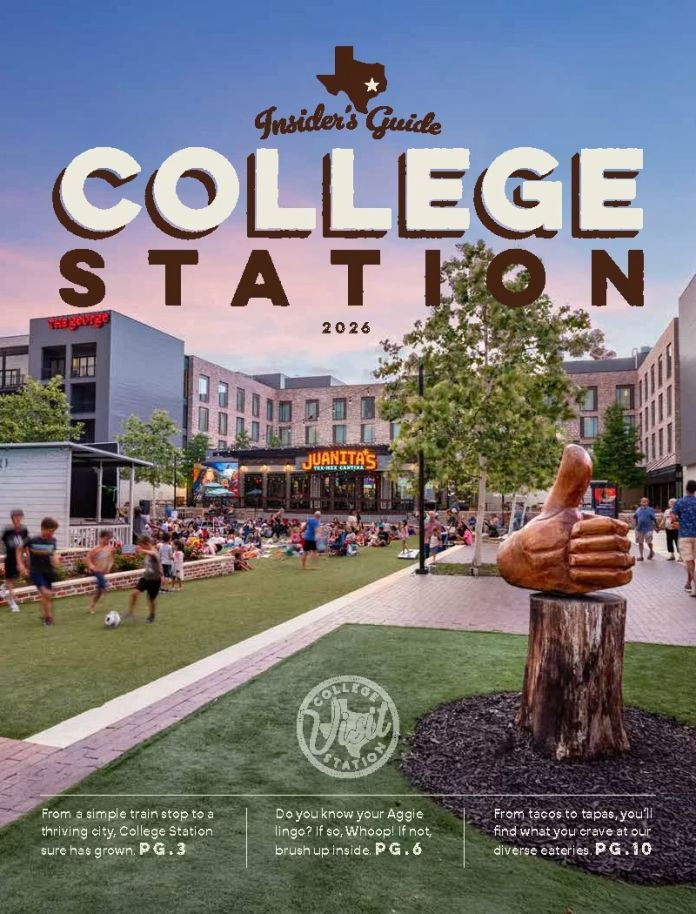
College Station has grown rapidly over the past two decades, fueled by Texas A&M enrollment and steady professional migration. The city has expanded more than 80% since 2000 and continues to add residents at roughly 1.5% per year. Median age skews young because of the student population, but family households earn well above the headline median income.
| Metric | Value |
|---|---|
| City Population | Approximately 125,000 |
| Metro Population (Bryan-College Station) | Approximately 268,000 |
| Annual Growth Rate | About 1.5% |
| Median Age | 22.9 years |
| Median Household Income (Overall) | $51,776 |
| Family Household Income | Approximately $93,000 |
| Unemployment Rate | 3% to 3.7% |
| Group | Percentage |
|---|---|
| White | 65% |
| Asian | 10% |
| Black or African American | 9% |
| Hispanic or Latino (any race) | 15% |
| Two or More Races | 3% |
| Other | 2% |
The community has one of the most highly educated populations in Texas. The presence of Texas A&M faculty, researchers, and graduate-degree professionals shapes the local culture and supports a sophisticated retail, dining, and cultural environment despite the city's mid-sized population.